
Typing Trainer: Free Online Tutor to Improve Typing Speed
Use a free online typing trainer to build touch-typing skills, increase typing speed, improve accuracy, and practice with structured lessons. Start practicing!
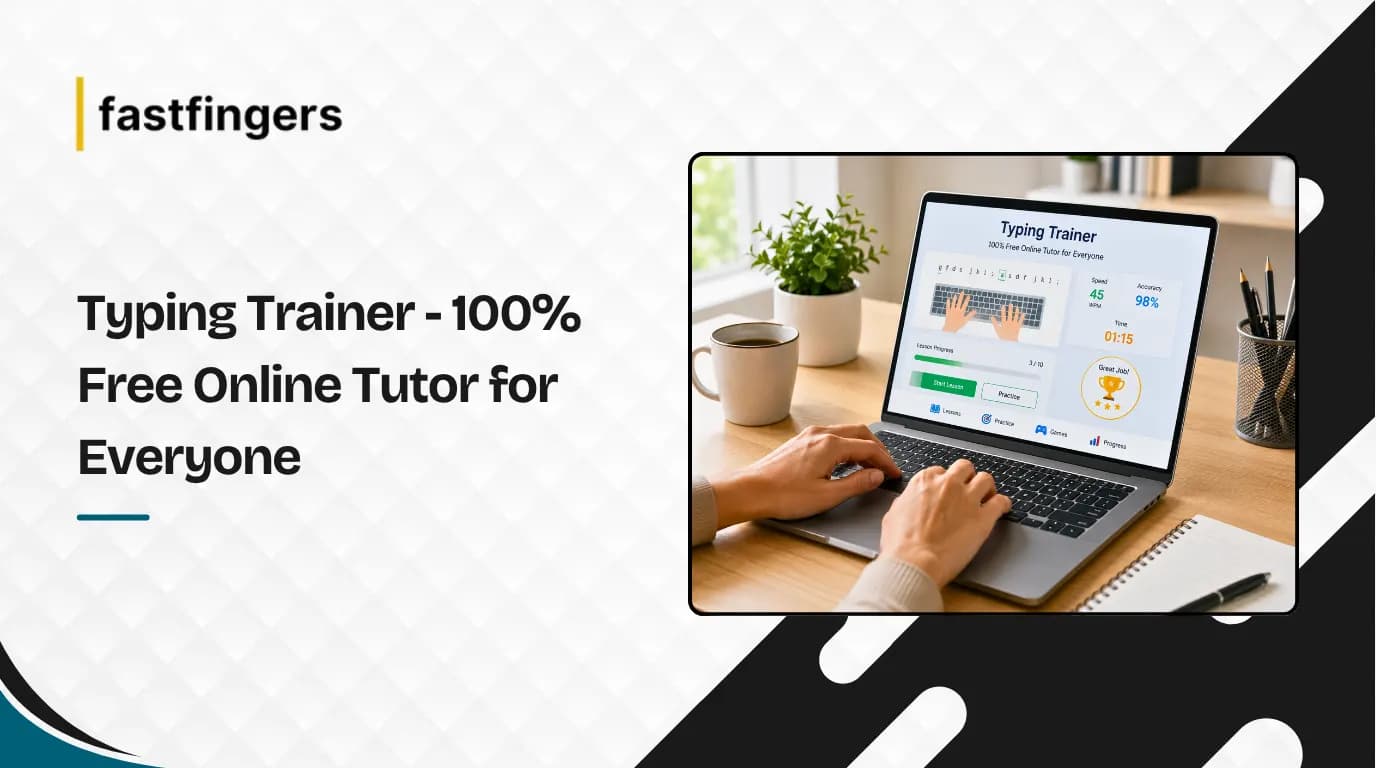
Typing Trainer - 100% Free Online Tutor for Everyone
A typing trainer is a free online tool that teaches correct finger placement and builds typing speed through guided lessons. It works for everyone, from a school student picking up the keyboard for the first time to a professional who still glances down while typing an email.
What Is a Typing Trainer?
A typing trainer is software that guides your fingers through structured lessons. No guesswork involved. It shows which finger belongs on which key, and it corrects bad habits before they settle in.
Most tools begin with the home row. Letters get added slowly, one small batch at a time, as your fingers grow comfortable with the layout. A rushed typing tutor skips this stage, and that almost always shows up later as messy, inconsistent typing.
People mix this up with a typing test fairly often. A test just measures your current speed. A trainer builds the skill, lesson by lesson, until touch typing stops requiring conscious thought.
Why Should You Use a Typing Trainer?
You should use a typing trainer because it builds real technique, not the two-finger hunting method most people fall back on. Speed without accuracy tends to fall apart the moment real work pressure kicks in.
Think about office staff typing reports and emails for hours every day. A structured typing trainer helps them get through that faster, with fewer corrections. Students gearing up for computer exams lean on the same kind of typing practice, usually starting weeks before the actual test.
Lessons on most platforms come in small stages, so progress feels steady instead of overwhelming. Plenty of learners quit typing practice early simply because it felt slow and repetitive without any visible structure.
There's a physical benefit too. Correct finger placement takes pressure off a couple of overworked fingers, and wrist strain tends to drop once that habit forms.
How Does a Typing Trainer Work?
A typing trainer works by handing you short lessons built around specific keys, then raising the difficulty once your accuracy holds steady through regular typing practice. Each lesson sticks to a small set of letters before the next one begins.
Behind the scenes, the software logs every keystroke. Wrong keys get flagged instantly, and your speed and accuracy numbers shift in real time as you type.
A typical session tends to follow this rough shape:
| Stage | Focus | Goal |
|---|---|---|
| 1 | Home row keys | Build finger memory |
| 2 | Upper and lower rows | Expand key coverage |
| 3 | Common words | Improve flow and rhythm |
| 4 | Full sentences | Increase real typing speed |
| 5 | Timed drills | Track overall progress |
That gradual buildup is what separates a proper trainer from just typing random paragraphs on your own.
Which Skills Does a Typing Trainer Improve?
A typing trainer improves speed, accuracy, finger memory, and general confidence at the keyboard, and these gains show up everywhere on a computer, not just in typing lessons.
Learning touch typing removes the need to look down constantly, which speeds up how fast your thoughts turn into typed words.Spelling tends to improve too, since typing practice reinforces word patterns through repetition.
Fewer backspace corrections. Better posture. Quicker keyboard navigation without thinking about it. Steady gains in typing speed within just a few weeks of showing up consistently.
Where Can You Find a Free Typing Trainer Online?
You can find a free typing trainer on practice websites built for lessons, not just quick speed checks. FastFingers is one worth trying, since it packs both a typing trainer and a typing test into one platform.
Schools and coaching centers across India often point students toward fastfingers.in while preparing for computer typing exams. The lessons stay structured, and feedback shows up instantly instead of after a long delay.
A few basics are worth checking before settling on any typing tutor online: clear beginner lessons, accurate error tracking, no charges hidden behind a "free" label, and a certificate option once practice sessions wrap up.
How Long Does It Take to Learn Typing With a Trainer?
Most beginners notice real improvement within two to three weeks of daily practice. Comfortable touch typing takes about one to two months, depending on how often someone practices.
Consistency beats marathon sessions here. Fifteen focused minutes a day works better than one exhausting two-hour session squeezed in once a week.
Starting point matters too. Someone who already knows a handful of keys moves through the early stages faster than a complete beginner.
Which Typing Trainer Is Best for Beginners?
The best typing trainer for beginners keeps lessons short and skips complicated dashboards entirely. A cluttered interface discourages new learners before they even finish lesson one.
Look for something that lets you repeat lessons as many times as needed, and adjusts difficulty based on your actual accuracy rather than shoving you forward on a fixed schedule.
fastfingers.in fits this well. As a typing tutor, it keeps training simple, yet it still tracks speed and accuracy across every session, so beginners can watch their own progress instead of guessing at it.
-
Related Typing Guides
Frequently Asked Questions
1. Is a typing trainer really free to use?
Yes. Most platforms offer full access to lessons and practice sessions without any cost.
2. How is a typing trainer different from a typing test?
A trainer teaches technique through lessons. A typing test just measures your current speed.
3. Can adults use a typing trainer too?
Yes, adults use it regularly to improve speed for work tasks or exam requirements.
4. Do I need to install software for a typing trainer?
No. Most trainers run directly in the browser, with nothing to download.
5. How often should I practice on a typing trainer?
Short daily sessions of ten to fifteen minutes beat occasional long sessions.